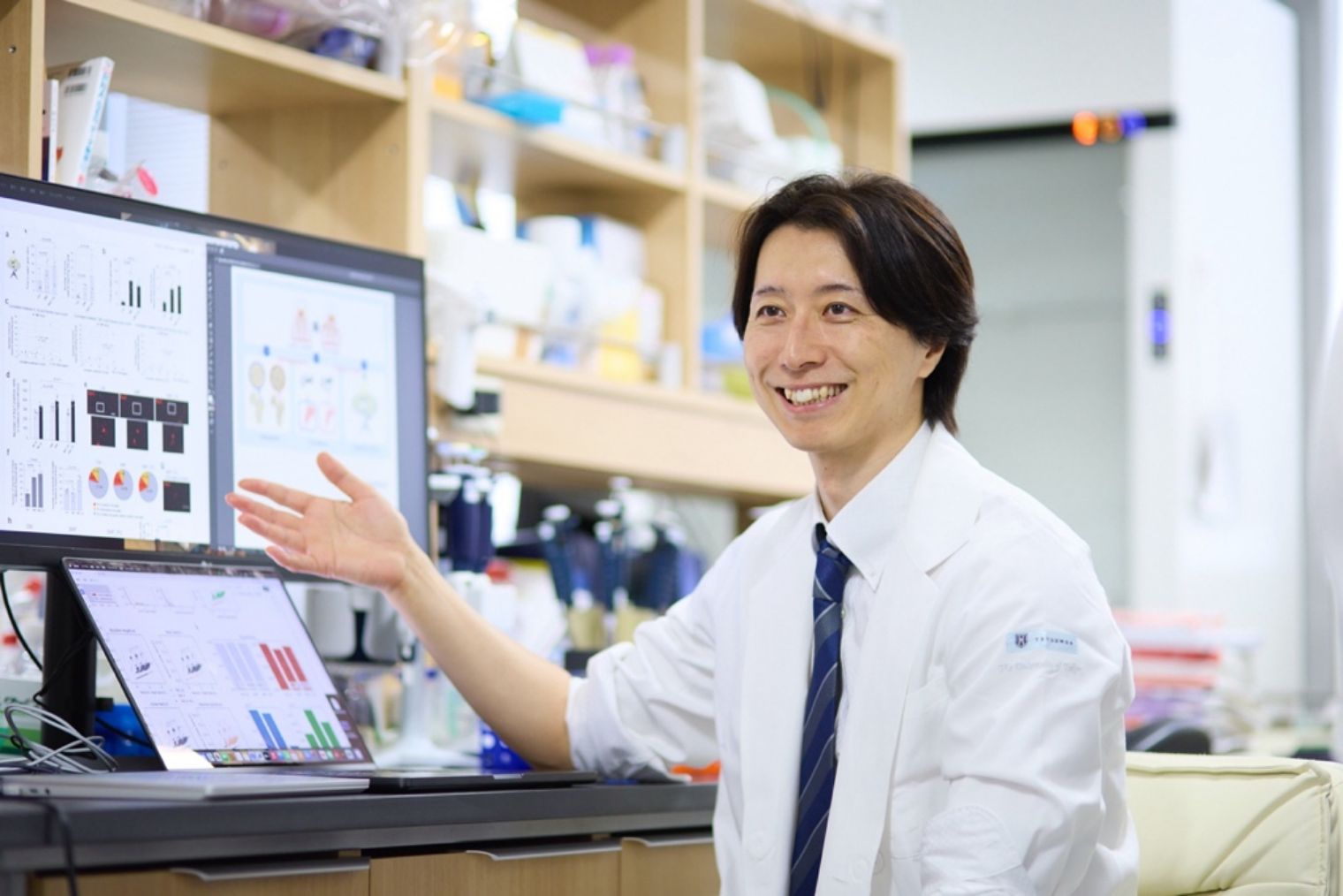
Our laboratory focuses on two major pillars: the control of aging and regenerative medicine. We conduct a wide range of research, spanning from fundamental studies that probe the essence of aging to translational research aimed at extending healthy life expectancy in older adults.
In the field of geriatrics, traditional approaches have primarily emphasized managing symptoms and preventing complications associated with age-related diseases and functional decline — a strategy often referred to as “with aging.” However, recent advances have made it increasingly clear that aging itself is a fundamental risk factor underlying many diseases. As a result, strategies that actively modulate the aging process, or “anti-aging” approaches, have garnered significant attention.
Although medical and social efforts have led to remarkable extensions of average life expectancy, healthy life expectancy — the period of life free from major health limitations — has not kept pace. A key challenge in modern geriatrics is not merely prolonging lifespan, but extending the period during which individuals can live physically and mentally healthy, active lives.
Our laboratory is built on the perspective that aging is not an entirely unmodifiable process. We aim to both slow the progression of aging and partially reverse biological aging — in other words, to achieve rejuvenation. Through these efforts, we seek to reduce disease risk and preserve organ function in later life, thereby extending healthy life expectancy.
As a physician working in clinical practice, I have witnessed firsthand the profound impact that age-related diseases and functional decline have on patients’ daily lives. These experiences have motivated me to reexamine the underlying mechanisms of disease through basic research, and to return these insights to clinical practice. This “bedside-to-bench and back” approach — translating clinical observations into fundamental research questions and bringing the resulting discoveries back to the bedside — represents a defining strength of our laboratory and exemplifies the perspective of a physician-scientist.
By integrating basic biology, regenerative medicine, and geriatrics, we pursue interdisciplinary research that aims to create innovative medical, therapeutic, and drug development strategies centered on aging control. We are committed to contributing to the realization of a society of healthy longevity. We warmly welcome those who aspire to bridge clinical practice and research, as well as anyone interested in aging biology or geriatric medicine, to connect with our laboratory.
Yoshitaka Kase