Hidden Genetic Mismatch, Which Triples the Risk of a Life-Threatening Immune Attack After Cord Blood Transplantation
Large registry study reveals a specific donor–recipient genetic mismatch linked to life-threatening transplant complications
A Japanese study of more than 7,400 patients has identified a genetic mismatch that sharply increases the risk of severe acute graft-versus-host disease (GVHD) following umbilical cord blood transplantation. The specific donor–recipient human leukocyte antigen mismatch triples the likelihood of life-threatening immune complications, and severe acute GVHD itself is associated with significantly worse survival. These findings may help refine donor selection and improve the safety and long-term outcomes of stem cell transplantation.
Umbilical cord blood transplantation has transformed the treatment options for patients with blood cancers and other life-threatening hematological disorders, particularly when matched donors are unavailable. While cord blood is known for its ability to tolerate genetic mismatches better than other donor sources, severe immune complications remain a major barrier to long-term survival. Now, scientists from Fujita Health University have identified a specific genetic mismatch that dramatically increases the risk of the most dangerous form of acute graft-versus-host disease (aGVHD), a complication in which donor immune cells attack the patient’s tissues.
A research team led by Associate Professor Takakazu Kawase from the Department of Immune Regenerative Medicine at the International Center for Cell and Gene Therapy, Fujita Health University, Japan, working on behalf of the Japanese Society for Transplantation and Cellular Therapy (JSTCT) HLA Working Group, conducted one of the largest studies of its kind to examine how individual human leukocyte antigen (HLA) mismatch combinations affect outcomes after unrelated cord blood transplantation (UCBT). The team analyzed nationwide registry data from 7,462 Japanese patients aged 16 years and older who underwent their first UCBT. The study was made available online on October 3, 2025, and published in Volume 32, Issue 1 of the journal Transplantation and Cellular Therapy on January 1, 2026.
In stem cell transplantation, HLA molecules play a central role in immune recognition. Traditionally, donor selection has focused on minimizing the total number of HLA mismatches. However, not all mismatches provoke the same immune response. Some combinations may trigger disproportionate immune activation, leading to severe aGVHD. To investigate this, the researchers used advanced statistical models that are adjusted for clinical factors such as patient age, disease status, conditioning regimen, graft cell dose, and the overall number of mismatches.
Their analysis revealed a striking finding: a previously unrecognized mismatch—HLA-C*03:04 in the donor paired with HLA-C*14:02 in the recipient—was associated with a threefold increase in the risk of severe (grade III–IV) aGVHD. This effect was robust, remaining statistically significant even after strict correction for multiple testing, with a hazard ratio of 3.09. Importantly, high-risk mismatch combinations previously reported in unrelated bone marrow transplantation did not show the same effect in cord blood transplantation, highlighting a unique risk profile for UCBT.
“This study shows that even in cord blood transplantation, where HLA mismatches are generally better tolerated, specific HLA combinations can provoke very strong immune reactions,” said Dr. Kawase. “Identifying these high-risk mismatches gives us an opportunity to improve donor selection and reduce life-threatening complications.”
The researchers also examined the broader clinical impact of aGVHD. Using time-dependent analysis, they found that while grade II–IV aGVHD could be associated with improved survival, likely reflecting beneficial immune effects, the onset of severe grade III–IV aGVHD significantly worsened overall survival, increasing the risk of death by about 80% (hazard ratio 1.82). These findings underscore the importance of preventing severe GVHD rather than simply managing it after the onset.
The real-world implications of this work are substantial. By incorporating knowledge of this newly identified high-risk mismatch into cord blood unit selection algorithms, clinicians may be able to avoid donor–recipient combinations that carry a heightened risk of severe GVHD, especially when alternative units are available. Over time, this approach is expected to improve transplant safety and outcomes.
Reflecting on the motivation behind the study, Dr. Kawase explained, “We have been engaged in long-term analysis of transplant registry data with the goal of building solid evidence that improves patient outcomes. In earlier work, we were the first to identify high-risk HLA mismatch combinations in unrelated bone marrow transplantation, and this study is a continuation of that effort in cord blood transplantation.”
Looking ahead, the team believes that continued research into genetic and immunological factors driving severe GVHD will help refine transplant strategies further. Such advances could significantly improve survival and quality of life for patients undergoing stem cell transplantation in the next 5 to 10 years.
A Japanese study of more than 7,400 patients has identified a genetic mismatch that sharply increases the risk of severe acute graft-versus-host disease (GVHD) following umbilical cord blood transplantation. The specific donor–recipient human leukocyte antigen mismatch triples the likelihood of life-threatening immune complications, and severe acute GVHD itself is associated with significantly worse survival. These findings may help refine donor selection and improve the safety and long-term outcomes of stem cell transplantation.
Umbilical cord blood transplantation has transformed the treatment options for patients with blood cancers and other life-threatening hematological disorders, particularly when matched donors are unavailable. While cord blood is known for its ability to tolerate genetic mismatches better than other donor sources, severe immune complications remain a major barrier to long-term survival. Now, scientists from Fujita Health University have identified a specific genetic mismatch that dramatically increases the risk of the most dangerous form of acute graft-versus-host disease (aGVHD), a complication in which donor immune cells attack the patient’s tissues.
A research team led by Associate Professor Takakazu Kawase from the Department of Immune Regenerative Medicine at the International Center for Cell and Gene Therapy, Fujita Health University, Japan, working on behalf of the Japanese Society for Transplantation and Cellular Therapy (JSTCT) HLA Working Group, conducted one of the largest studies of its kind to examine how individual human leukocyte antigen (HLA) mismatch combinations affect outcomes after unrelated cord blood transplantation (UCBT). The team analyzed nationwide registry data from 7,462 Japanese patients aged 16 years and older who underwent their first UCBT. The study was made available online on October 3, 2025, and published in Volume 32, Issue 1 of the journal Transplantation and Cellular Therapy on January 1, 2026.
In stem cell transplantation, HLA molecules play a central role in immune recognition. Traditionally, donor selection has focused on minimizing the total number of HLA mismatches. However, not all mismatches provoke the same immune response. Some combinations may trigger disproportionate immune activation, leading to severe aGVHD. To investigate this, the researchers used advanced statistical models that are adjusted for clinical factors such as patient age, disease status, conditioning regimen, graft cell dose, and the overall number of mismatches.
Their analysis revealed a striking finding: a previously unrecognized mismatch—HLA-C*03:04 in the donor paired with HLA-C*14:02 in the recipient—was associated with a threefold increase in the risk of severe (grade III–IV) aGVHD. This effect was robust, remaining statistically significant even after strict correction for multiple testing, with a hazard ratio of 3.09. Importantly, high-risk mismatch combinations previously reported in unrelated bone marrow transplantation did not show the same effect in cord blood transplantation, highlighting a unique risk profile for UCBT.
“This study shows that even in cord blood transplantation, where HLA mismatches are generally better tolerated, specific HLA combinations can provoke very strong immune reactions,” said Dr. Kawase. “Identifying these high-risk mismatches gives us an opportunity to improve donor selection and reduce life-threatening complications.”
The researchers also examined the broader clinical impact of aGVHD. Using time-dependent analysis, they found that while grade II–IV aGVHD could be associated with improved survival, likely reflecting beneficial immune effects, the onset of severe grade III–IV aGVHD significantly worsened overall survival, increasing the risk of death by about 80% (hazard ratio 1.82). These findings underscore the importance of preventing severe GVHD rather than simply managing it after the onset.
The real-world implications of this work are substantial. By incorporating knowledge of this newly identified high-risk mismatch into cord blood unit selection algorithms, clinicians may be able to avoid donor–recipient combinations that carry a heightened risk of severe GVHD, especially when alternative units are available. Over time, this approach is expected to improve transplant safety and outcomes.
Reflecting on the motivation behind the study, Dr. Kawase explained, “We have been engaged in long-term analysis of transplant registry data with the goal of building solid evidence that improves patient outcomes. In earlier work, we were the first to identify high-risk HLA mismatch combinations in unrelated bone marrow transplantation, and this study is a continuation of that effort in cord blood transplantation.”
Looking ahead, the team believes that continued research into genetic and immunological factors driving severe GVHD will help refine transplant strategies further. Such advances could significantly improve survival and quality of life for patients undergoing stem cell transplantation in the next 5 to 10 years.
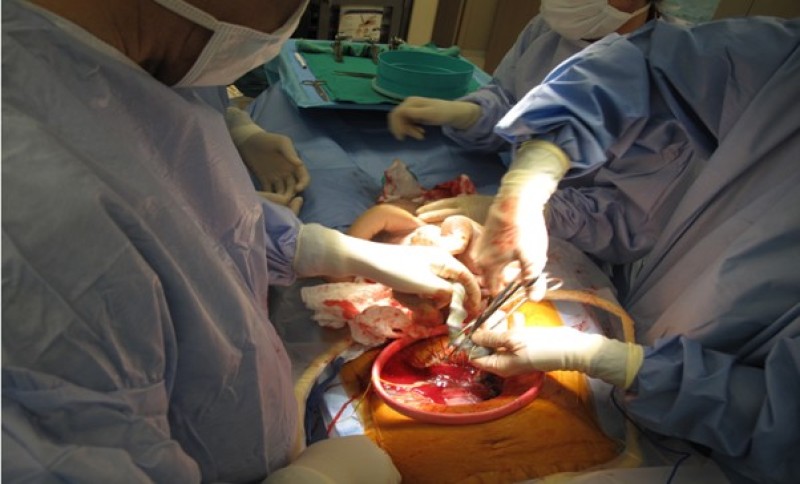
Image title: Umbilical Cord Blood as a Stem Cell Source
Image caption: Umbilical cord blood is used as a source of hematopoietic stem cells for patients with blood cancers and other life-threatening disorders when matched donors are unavailable.
Image credit: Mat Honan from San Francisco, CA, USA from Openverse
Image source link: https://openverse.org/image/2850cb30-6f09-4631-95ff-55112126a1c9?q=Umbilical+Cord&p=24
License type: CC BY 2.0
Usage restrictions: Credit should be given to the creator.
Image caption: Umbilical cord blood is used as a source of hematopoietic stem cells for patients with blood cancers and other life-threatening disorders when matched donors are unavailable.
Image credit: Mat Honan from San Francisco, CA, USA from Openverse
Image source link: https://openverse.org/image/2850cb30-6f09-4631-95ff-55112126a1c9?q=Umbilical+Cord&p=24
License type: CC BY 2.0
Usage restrictions: Credit should be given to the creator.
Reference
Title of original paper:
High-Risk Human Leukocyte Antigen Mismatch Combinations Responsible for Severe Acute Graft-Versus-Host Disease in Cord Blood TransplantationJournal:
Transplantation and Cellular TherapyDOI:
10.1016/j.jtct.2025.09.045About Associate Professor Takakazu Kawase from Fujita Health University, Japan
Dr. Takakazu Kawase serves as an Associate Professor in the Department of Immune Regenerative Medicine at the International Center for Cell and Gene Therapy, Fujita Health University, Japan. With a prolific academic record, he has authored over 75 scientific articles, garnering more than 3,350 citations. His primary research interests include bone marrow transplantation, human leukocyte antigen (HLA) compatibility, acute graft-versus-host disease, and transplant immunology. He is internationally recognized for his pioneering work in identifying high-risk HLA mismatch combinations, which has fundamentally influenced clinical strategies for improving transplant outcomes.
Funding information
Makoto Murata has received research funding from Chugai Pharmaceutical, JCR Pharma, and Otsuka Pharmaceutical; and honoraria from Alexion, Asahi Kasei, Astellas Pharma, AstraZeneca, Bristol-Myers Squibb, Chugai Pharmaceutical, Daiichi Sankyo, Eisai, Sanofi, Kissei, Janssen Pharmaceutical, JCR Pharma, Kyowa Kirin, Meiji Seika Pharma, MSD, Mundipharma, Nippon Kayaku, Nippon Shinyaku, Novartis Pharma, Novo Nordisk Japan, Ono Pharma, Pfizer Japan, Sumitomo Pharma, and Takeda Pharmaceutical.