How Talking Slows Eye Movements Behind the Wheel
New study shows that everyday conversations can delay eye movements, essential for safe driving
New research from Fujita Health University reveals that talking can subtly delay the eyes’ ability to detect and stabilize on visual information. In experiments comparing talking, listening, and control conditions, only talking caused slower reaction, movement, and fixation times during rapid eye-movement tasks. Because driving depends heavily on fast gaze shifts, these delays may impair hazard detection and slow physical responses. The findings highlight the hidden risks of engaging in conversation while driving.
Talking while driving is widely recognized as a major source of distraction, but the specific ways conversation interferes with the earliest stages of visual processing have remained largely unclear. While previous research has shown that cognitive distraction can slow braking or reduce situational awareness, the question of whether talking disrupts the foundational gaze processes that precede physical reactions has remained unanswered.
Now, researchers from Fujita Health University have demonstrated that talking imposes cognitive load strong enough to delay essential eye-movement responses, potentially affecting the fast visual assessments required for safe driving. A study led by Associate Professor Shintaro Uehara and the team, including Mr. Takuya Suzuki and Professor Takaji Suzuki, published online on October 6, 2025, in PLOS ONE, examined how talking alters the temporal dynamics of gaze behavior.
Gaze behavior is especially significant because approximately 90% of the information used for driving is acquired visually. Any delay in initiating or completing eye movements can cascade into slower recognition of hazards, reduced accuracy of visual scanning, and delayed motor responses. “We investigated whether the impact of talking-related cognitive load on gaze behavior varies depending on the direction of eye movement,” explains Dr. Uehara.
To investigate this, the researchers asked 30 healthy adults to perform rapid center-out eye-movement tasks under three different conditions: talking, listening, and a no-task control. Participants were instructed to look as quickly and accurately as possible toward a peripheral visual target presented in one of eight directions. In the talking condition, participants answered general knowledge and episodic questions adapted from the Wechsler Adult Intelligence Scale and additional custom prompts. In the listening condition, participants listened to passages from the Japanese novel I Am a Cat. The order of conditions was randomized across three separate days. Across all participants, talking produced clear and consistent delays in three key temporal components of gaze behavior: the time needed to initiate the eye movement after target appearance (reaction time), the time needed to reach the target (movement time), and the time needed to stabilize gaze on the target (adjusting time). None of these effects were observed during listening or control conditions, suggesting that the act of talking and the cognitive effort required to search for and produce verbal answers create meaningful interference with gaze control mechanisms.
These delays appear small in isolation, but during driving, they may accumulate into slower detection of hazards and delayed initiation of physical responses. Even hands-free conversations may introduce a cognitive load strong enough to interfere with the neural processes that initiate and guide eye movements. Because drivers often need to look downward toward pedestrians, debris, or objects on the road, these delays highlight the broad risks of conversation during visually demanding driving scenarios.
The authors note that their findings do not imply that talking is the sole or dominant cause of slowed physical reactions behind the wheel. Driving performance is influenced by multiple cognitive and perceptual factors, including inattentional blindness, divided attention, and the broader interference that occurs when the brain is forced to manage two demanding tasks at once. Even so, the study demonstrates that talking introduces delays at the earliest stage of visual processing before recognition, decision-making, or physical action, which means it may quietly undermine driving performance in ways that are not immediately obvious to drivers themselves. “These results indicate that the cognitive demands associated with talking interfere with the neural mechanisms responsible for initiating and controlling eye movements, which represent the critical first stage of visuomotor processing during driving,” concludes Dr. Uehara.
These insights carry meaningful implications for public safety. By understanding that the cognitive effort involved in conversation can degrade gaze accuracy and timing, drivers may become more mindful about when and how they choose to talk while driving. Over time, this knowledge could support safer driving behaviors, inform driver-training frameworks, inspire improvements in vehicle interface design, and guide policymakers in shaping future recommendations around cognitive distraction.
New research from Fujita Health University reveals that talking can subtly delay the eyes’ ability to detect and stabilize on visual information. In experiments comparing talking, listening, and control conditions, only talking caused slower reaction, movement, and fixation times during rapid eye-movement tasks. Because driving depends heavily on fast gaze shifts, these delays may impair hazard detection and slow physical responses. The findings highlight the hidden risks of engaging in conversation while driving.
Talking while driving is widely recognized as a major source of distraction, but the specific ways conversation interferes with the earliest stages of visual processing have remained largely unclear. While previous research has shown that cognitive distraction can slow braking or reduce situational awareness, the question of whether talking disrupts the foundational gaze processes that precede physical reactions has remained unanswered.
Now, researchers from Fujita Health University have demonstrated that talking imposes cognitive load strong enough to delay essential eye-movement responses, potentially affecting the fast visual assessments required for safe driving. A study led by Associate Professor Shintaro Uehara and the team, including Mr. Takuya Suzuki and Professor Takaji Suzuki, published online on October 6, 2025, in PLOS ONE, examined how talking alters the temporal dynamics of gaze behavior.
Gaze behavior is especially significant because approximately 90% of the information used for driving is acquired visually. Any delay in initiating or completing eye movements can cascade into slower recognition of hazards, reduced accuracy of visual scanning, and delayed motor responses. “We investigated whether the impact of talking-related cognitive load on gaze behavior varies depending on the direction of eye movement,” explains Dr. Uehara.
To investigate this, the researchers asked 30 healthy adults to perform rapid center-out eye-movement tasks under three different conditions: talking, listening, and a no-task control. Participants were instructed to look as quickly and accurately as possible toward a peripheral visual target presented in one of eight directions. In the talking condition, participants answered general knowledge and episodic questions adapted from the Wechsler Adult Intelligence Scale and additional custom prompts. In the listening condition, participants listened to passages from the Japanese novel I Am a Cat. The order of conditions was randomized across three separate days. Across all participants, talking produced clear and consistent delays in three key temporal components of gaze behavior: the time needed to initiate the eye movement after target appearance (reaction time), the time needed to reach the target (movement time), and the time needed to stabilize gaze on the target (adjusting time). None of these effects were observed during listening or control conditions, suggesting that the act of talking and the cognitive effort required to search for and produce verbal answers create meaningful interference with gaze control mechanisms.
These delays appear small in isolation, but during driving, they may accumulate into slower detection of hazards and delayed initiation of physical responses. Even hands-free conversations may introduce a cognitive load strong enough to interfere with the neural processes that initiate and guide eye movements. Because drivers often need to look downward toward pedestrians, debris, or objects on the road, these delays highlight the broad risks of conversation during visually demanding driving scenarios.
The authors note that their findings do not imply that talking is the sole or dominant cause of slowed physical reactions behind the wheel. Driving performance is influenced by multiple cognitive and perceptual factors, including inattentional blindness, divided attention, and the broader interference that occurs when the brain is forced to manage two demanding tasks at once. Even so, the study demonstrates that talking introduces delays at the earliest stage of visual processing before recognition, decision-making, or physical action, which means it may quietly undermine driving performance in ways that are not immediately obvious to drivers themselves. “These results indicate that the cognitive demands associated with talking interfere with the neural mechanisms responsible for initiating and controlling eye movements, which represent the critical first stage of visuomotor processing during driving,” concludes Dr. Uehara.
These insights carry meaningful implications for public safety. By understanding that the cognitive effort involved in conversation can degrade gaze accuracy and timing, drivers may become more mindful about when and how they choose to talk while driving. Over time, this knowledge could support safer driving behaviors, inform driver-training frameworks, inspire improvements in vehicle interface design, and guide policymakers in shaping future recommendations around cognitive distraction.
Reference
Title of original paper:
Talking-associated cognitive loads degrade the quality of gaze behaviorJournal:
PLOS OneDOI:
10.1371/journal.pone.0333586
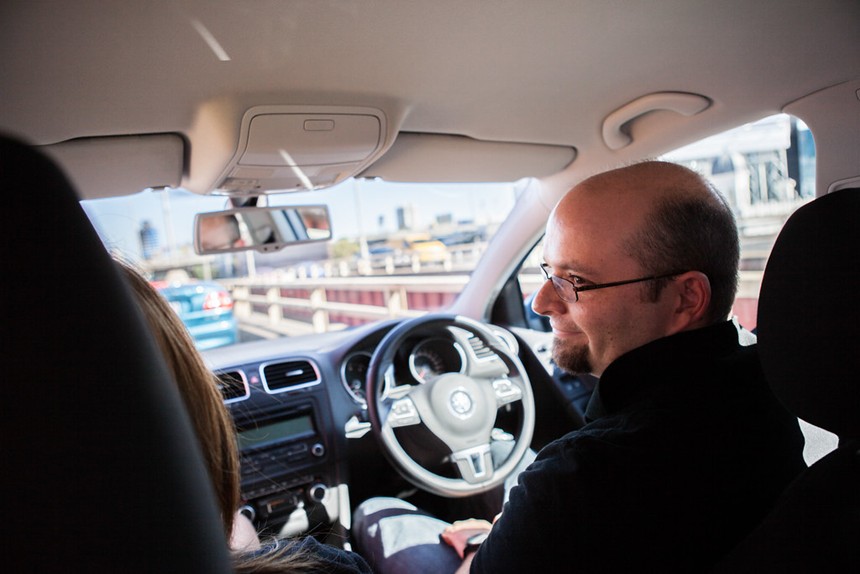
Image Title: Talking Slows Critical Eye Movements During Driving
Image Caption: A driver’s gaze shifts rapidly to detect hazards; this study shows talking slows these critical eye movements, risking safety
Image link: https://openverse.org/image/09b61da2-196c-4350-94e1-84d33d106fa7
Image Credits: Envato from Flickr
Image License: CC BY 2.0
Usage Restriction: Credit must be given to the creator
Image Caption: A driver’s gaze shifts rapidly to detect hazards; this study shows talking slows these critical eye movements, risking safety
Image link: https://openverse.org/image/09b61da2-196c-4350-94e1-84d33d106fa7
Image Credits: Envato from Flickr
Image License: CC BY 2.0
Usage Restriction: Credit must be given to the creator
About Associate Professor Shintaro Uehara from Fujita Health University
Shintaro Uehara is an Associate Professor at the Fujita Health University School of Health Sciences. His research portfolio primarily focuses on rehabilitation science and the neural mechanisms underlying human movement behavior including motor learning. His work integrates behavioral experimentation with advanced motion-tracking and electrophysiological technologies, producing beneficial insights into clinical rehabilitation. He received his PhD in Human and Environmental Studies from Kyoto University in 2013 and held postdoctoral positions at the National Institute of Information and Communications Technology in Japan and Johns Hopkins Medicine in the US before joining Fujita Health University in 2018. To date, he has authored more than 50 publications with over 500 citations.
Funding information
The author(s) received no specific funding for this work.