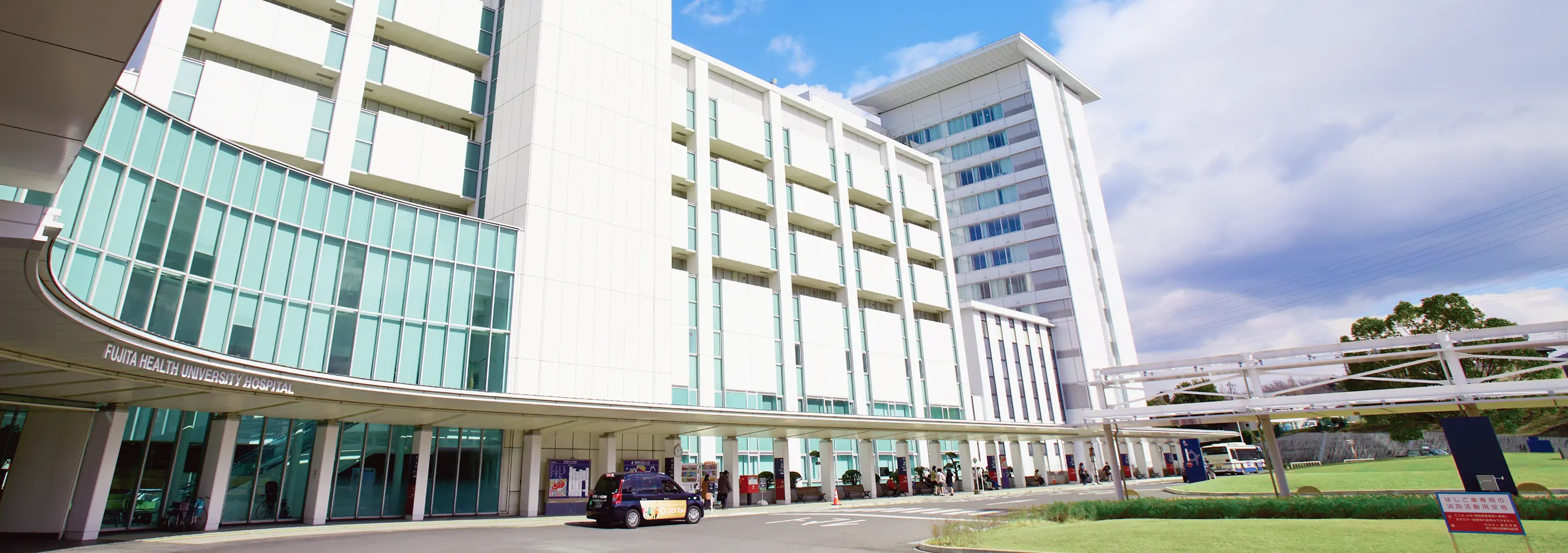
Beyond Frailty: Mild Cognitive Impairment Is Linked to Slower Gait
Researchers find that mild cognitive impairment is associated with slower gait speed, independent of frailty, in older individuals
Gait is a fundamental activity of daily living that reflects physical and cognitive function. Researchers studied 421 older individuals and found that mild cognitive impairment was associated with slower gait speed during both comfortable and fast walking, even after accounting for frailty. The findings add evidence that gait speed, already used to assess physical function, may also help assess cognitive function and support future cognitive screening in daily life.
Gait is a fundamental activity of daily living and can reflect multiple aspects of physical and cognitive function in older individuals. Slower gait speed is commonly associated with frailty, a condition in which the body has a reduced ability to withstand stressors. Mild cognitive impairment (MCI), which involves a decline in cognitive function without a major loss of independence in daily activities, is also associated with slower gait. However, because frailty and MCI often occur together, it has remained unclear whether the association between MCI and gait speed is independent of physical function.
To address this gap, a research team, led by Professor Yohei Otaka from the Department of Rehabilitation Medicine, School of Medicine, Fujita Health University, Japan, investigated whether MCI was associated with gait speed even after accounting for frailty. The study also examined whether MCI and frailty had an interactive effect on gait speed. “Gait speed is simple to measure and is already widely used as an indicator of physical function in older individuals. This study further supported the evidence that not only physical function but also cognitive function per se influences gait speed,” explains Prof. Otaka. The research also included contributions from Dr. Koki Tan, Prof. Shigeo Tanabe, Dr. Hikaru Kondo, Dr. Taisei Sugiyama, and Prof. Naoki Mori from Fujita Health University, Japan, along with other collaborators. The findings were made available online on May 9, 2026, and will be published in Volume 26 of the journal BMC Geriatrics on December 1, 2026.
To investigate this, the team conducted a cross-sectional study involving 421 individuals aged 60 years and older who were recruited through Silver Human Resources Centers in Tokyo and Nagoya between June and November 2024. Participants completed a 10-m walking test under two conditions: walking at a comfortable, self-selected speed and walking as fast as possible. Gait speed was calculated from the time taken to walk the central 6 m of the walkway, excluding the first and last 2 m used for acceleration and deceleration.
The researchers assessed frailty using the Japanese Kihon checklist and MCI using the Japanese version of the Montreal Cognitive Assessment. Based on these assessments, participants were classified into six groups according to their frailty and MCI status: frailty with MCI, frailty without MCI, pre-frailty with MCI, pre-frailty without MCI, non-frailty with MCI, and non-frailty without MCI.
The team found that frailty and MCI were independently associated with gait speed using mediation analysis. Among the models examined, the model receiving the strongest support indicated that frailty and MCI were each directly associated with gait speed, with little evidence that either affected gait speed through the other. This suggests that the association between MCI and slower gait speed was largely independent of frailty.
This finding was further supported by an analysis that considered frailty and MCI simultaneously while accounted for age, sex, and body mass index. Importantly, the researchers found no significant interaction between frailty and MCI, suggesting no evidence that the frailty and MCI status combine synergistically on gait speed. Together, the findings indicate that cognitive function may contribute to differences in gait speed alongside physical function.
“These findings provide a foundation for assessing cognitive decline from walking, expanding the potential applications for gait screening in daily life,” says Prof. Otaka. In the longer term, the researchers suggest that further studies could explore whether changes in everyday walking can help distinguish physical impairment from cognitive impairment. Wearable devices may eventually make it possible to incorporate gait assessment into routine health assessments, although further research is needed to determine how well gait measured in daily life can reflect these different aspects of health.
Gait is a fundamental activity of daily living that reflects physical and cognitive function. Researchers studied 421 older individuals and found that mild cognitive impairment was associated with slower gait speed during both comfortable and fast walking, even after accounting for frailty. The findings add evidence that gait speed, already used to assess physical function, may also help assess cognitive function and support future cognitive screening in daily life.
Gait is a fundamental activity of daily living and can reflect multiple aspects of physical and cognitive function in older individuals. Slower gait speed is commonly associated with frailty, a condition in which the body has a reduced ability to withstand stressors. Mild cognitive impairment (MCI), which involves a decline in cognitive function without a major loss of independence in daily activities, is also associated with slower gait. However, because frailty and MCI often occur together, it has remained unclear whether the association between MCI and gait speed is independent of physical function.
To address this gap, a research team, led by Professor Yohei Otaka from the Department of Rehabilitation Medicine, School of Medicine, Fujita Health University, Japan, investigated whether MCI was associated with gait speed even after accounting for frailty. The study also examined whether MCI and frailty had an interactive effect on gait speed. “Gait speed is simple to measure and is already widely used as an indicator of physical function in older individuals. This study further supported the evidence that not only physical function but also cognitive function per se influences gait speed,” explains Prof. Otaka. The research also included contributions from Dr. Koki Tan, Prof. Shigeo Tanabe, Dr. Hikaru Kondo, Dr. Taisei Sugiyama, and Prof. Naoki Mori from Fujita Health University, Japan, along with other collaborators. The findings were made available online on May 9, 2026, and will be published in Volume 26 of the journal BMC Geriatrics on December 1, 2026.
To investigate this, the team conducted a cross-sectional study involving 421 individuals aged 60 years and older who were recruited through Silver Human Resources Centers in Tokyo and Nagoya between June and November 2024. Participants completed a 10-m walking test under two conditions: walking at a comfortable, self-selected speed and walking as fast as possible. Gait speed was calculated from the time taken to walk the central 6 m of the walkway, excluding the first and last 2 m used for acceleration and deceleration.
The researchers assessed frailty using the Japanese Kihon checklist and MCI using the Japanese version of the Montreal Cognitive Assessment. Based on these assessments, participants were classified into six groups according to their frailty and MCI status: frailty with MCI, frailty without MCI, pre-frailty with MCI, pre-frailty without MCI, non-frailty with MCI, and non-frailty without MCI.
The team found that frailty and MCI were independently associated with gait speed using mediation analysis. Among the models examined, the model receiving the strongest support indicated that frailty and MCI were each directly associated with gait speed, with little evidence that either affected gait speed through the other. This suggests that the association between MCI and slower gait speed was largely independent of frailty.
This finding was further supported by an analysis that considered frailty and MCI simultaneously while accounted for age, sex, and body mass index. Importantly, the researchers found no significant interaction between frailty and MCI, suggesting no evidence that the frailty and MCI status combine synergistically on gait speed. Together, the findings indicate that cognitive function may contribute to differences in gait speed alongside physical function.
“These findings provide a foundation for assessing cognitive decline from walking, expanding the potential applications for gait screening in daily life,” says Prof. Otaka. In the longer term, the researchers suggest that further studies could explore whether changes in everyday walking can help distinguish physical impairment from cognitive impairment. Wearable devices may eventually make it possible to incorporate gait assessment into routine health assessments, although further research is needed to determine how well gait measured in daily life can reflect these different aspects of health.
Reference
Title of original paper:
Mild cognitive impairment has a direct effect on gait speed even when accounting for frailtyJournal:
BMC GeriatricsDOI:
10.1186/s12877-026-07609-1About Professor Yohei Otaka from Fujita Health University, Japan
Dr. Yohei Otaka is a Professor and Chairman of the Department of Rehabilitation Medicine at Fujita Health University School of Medicine, Japan. He earned his MD and PhD from Keio University School of Medicine, graduating in 1997, and has nearly three decades of experience in the field of rehabilitation medicine. He has authored 301 publications and holds 19 patents. Dr. Otaka’s research focuses on physical and cognitive rehabilitation, with particular interests in stroke, robotics, fall prevention, and dementia. He also serves as Director of the Research Center for Robotic Smart Home & Activity Assistive Technology, where his work explores the application of robotic and assistive technologies to support the daily lives of people living in the community.
Funding information
This research was partially supported by Flicfit Inc.
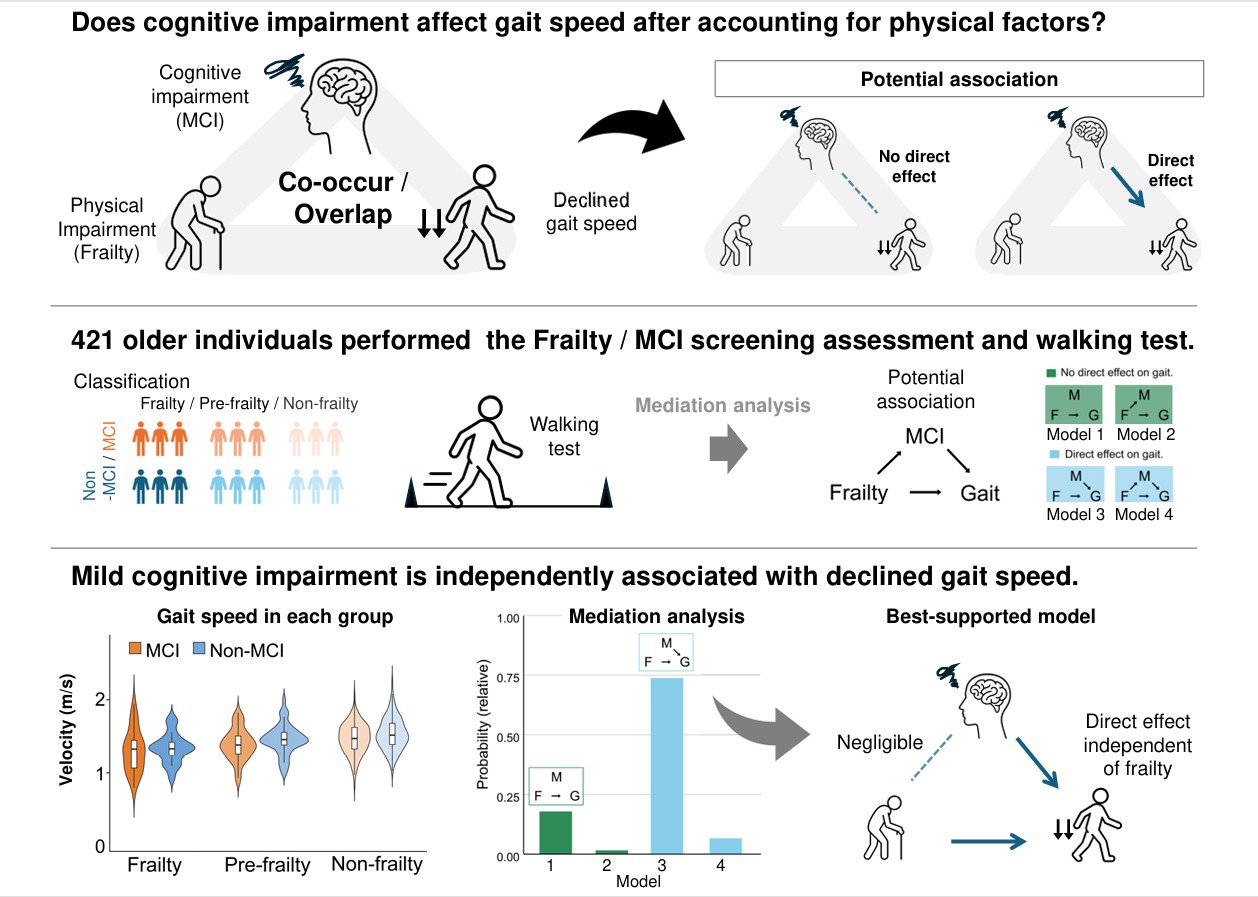
Image title: Mild Cognitive Impairment Is Independently Associated with Slower Gait Speed
Image caption: Researchers assessed frailty, mild cognitive impairment (MCI), and gait speed in 421 older individuals. Participants were classified by frailty and MCI status and completed comfortable and fast walking tests. Both MCI and frailty were independently associated with gait speed, with MCI showing a direct association with gait speed even after accounting for frailty.
Image credit: Professor Yohei Otaka from Fujita Health University, Japan
License type: Original content
Usage restrictions: Cannot be reused without permission.