Hyponatremia Risk May Differ Across Second-Generation Antipsychotics
Researchers compare second-generation antipsychotics and find aripiprazole associated with lower hyponatremia risk than olanzapine in routine clinical practice
Hyponatremia is associated with antipsychotic treatment, but risks may differ between individual medications. Now, researchers analyzed US FDA safety reports and a Japanese claims database involving 55,394 patients. The study found that aripiprazole was associated with a significantly lower risk of hyponatremia than olanzapine, with an adjusted hazard ratio of 0.52. Other antipsychotics showed no significant differences after adjustment. These findings may help inform antipsychotic selection for patients at a higher risk of hyponatremia.
Antipsychotics are used to treat schizophrenia, along with bipolar disorder and major depressive disorder. However, these medications can be associated with hyponatremia, a serious reduction in blood sodium levels. Although second-generation antipsychotics have been suggested to be associated with a lower risk of hyponatremia than first-generation antipsychotics, it remains unclear whether this risk differs between individual second-generation medications.
Addressing this challenge, a research team led by Associate Professor Masakazu Hatano from the Department of Pharmacotherapeutics and Informatics, Fujita Health University School of Medicine, Japan, along with Dr. Takenao Koseki, Dr. Takeo Saito, and Dr. Shigeki Yamada, all affiliated with the same institution, compared the risk of hyponatremia associated with individual second-generation antipsychotics. The study was published online on August 13, 2026, in Volume 9, Issue 8, of the journal JAMA Network Open.
“Hyponatremia is a safety concern associated with antipsychotic use, but comparative evidence among individual second-generation antipsychotics remains limited,” says Dr. Hatano. “We therefore adopted a two-stage approach. First, we used a spontaneous reporting system to generate hypotheses regarding hyponatremia risk among individual second-generation antipsychotics; second, we used a claims database to evaluate the associations obtained from the spontaneous reporting system.”
The researchers first examined reports from the US Food and Drug Administration Adverse Event Reporting System from quarter 4 of 1997 to quarter 3 of 2023, then subsequently evaluated the associations in a Japanese hospital-based claims database covering April 2008 to April 2024.
The US safety reporting analysis included 17,805,418 reports, of which 458,745 involved second-generation antipsychotic monotherapy. Several antipsychotics showed lower reporting odds for hyponatremia than olanzapine, the reference antipsychotic. Brexpiprazole and lurasidone showed the lowest reporting odds relative to olanzapine. However, these findings were hypothesis-generating because spontaneous reporting data do not provide denominator information and cannot measure actual incidence or absolute risk.
The researchers then evaluated the hypotheses using the Japanese hospital-based claims database. 55,394 patients prescribed with antipsychotics were included in the final analysis and had no recent antipsychotic use or hyponatremia, and were followed for up to 180 days after treatment initiation. During follow-up, hyponatremia occurred in 366 patients (0.7%) of the cohort.
After accounting for differences in baseline characteristics and other factors influencing risk, aripiprazole was associated with a significantly lower risk of hyponatremia than olanzapine. Other antipsychotics did not show significant differences compared with olanzapine after adjustment.
“These findings suggest that the risk of hyponatremia may differ among individual second-generation antipsychotics,” clarifies Dr. Hatano. “Aripiprazole was associated with a lower risk than olanzapine in our adjusted analysis, which may help inform antipsychotic selection for patients at higher risk of hyponatremia.”
However, researchers emphasized that the study was observational, so residual confounding and differences in how hyponatremia was detected may have influenced the findings.
Overall, the study provides evidence that hyponatremia risk may not be identical across second-generation antipsychotics. By combining evidence from a pharmacovigilance database with claims data, the research provides complementary evidence for comparing drug safety while recognizing important limitations. The findings will guide treatment decisions for patients at higher risk of hyponatremia. Further studies are needed to elucidate the associations between individual second-generation antipsychotics and hyponatremia.
Hyponatremia is associated with antipsychotic treatment, but risks may differ between individual medications. Now, researchers analyzed US FDA safety reports and a Japanese claims database involving 55,394 patients. The study found that aripiprazole was associated with a significantly lower risk of hyponatremia than olanzapine, with an adjusted hazard ratio of 0.52. Other antipsychotics showed no significant differences after adjustment. These findings may help inform antipsychotic selection for patients at a higher risk of hyponatremia.
Antipsychotics are used to treat schizophrenia, along with bipolar disorder and major depressive disorder. However, these medications can be associated with hyponatremia, a serious reduction in blood sodium levels. Although second-generation antipsychotics have been suggested to be associated with a lower risk of hyponatremia than first-generation antipsychotics, it remains unclear whether this risk differs between individual second-generation medications.
Addressing this challenge, a research team led by Associate Professor Masakazu Hatano from the Department of Pharmacotherapeutics and Informatics, Fujita Health University School of Medicine, Japan, along with Dr. Takenao Koseki, Dr. Takeo Saito, and Dr. Shigeki Yamada, all affiliated with the same institution, compared the risk of hyponatremia associated with individual second-generation antipsychotics. The study was published online on August 13, 2026, in Volume 9, Issue 8, of the journal JAMA Network Open.
“Hyponatremia is a safety concern associated with antipsychotic use, but comparative evidence among individual second-generation antipsychotics remains limited,” says Dr. Hatano. “We therefore adopted a two-stage approach. First, we used a spontaneous reporting system to generate hypotheses regarding hyponatremia risk among individual second-generation antipsychotics; second, we used a claims database to evaluate the associations obtained from the spontaneous reporting system.”
The researchers first examined reports from the US Food and Drug Administration Adverse Event Reporting System from quarter 4 of 1997 to quarter 3 of 2023, then subsequently evaluated the associations in a Japanese hospital-based claims database covering April 2008 to April 2024.
The US safety reporting analysis included 17,805,418 reports, of which 458,745 involved second-generation antipsychotic monotherapy. Several antipsychotics showed lower reporting odds for hyponatremia than olanzapine, the reference antipsychotic. Brexpiprazole and lurasidone showed the lowest reporting odds relative to olanzapine. However, these findings were hypothesis-generating because spontaneous reporting data do not provide denominator information and cannot measure actual incidence or absolute risk.
The researchers then evaluated the hypotheses using the Japanese hospital-based claims database. 55,394 patients prescribed with antipsychotics were included in the final analysis and had no recent antipsychotic use or hyponatremia, and were followed for up to 180 days after treatment initiation. During follow-up, hyponatremia occurred in 366 patients (0.7%) of the cohort.
After accounting for differences in baseline characteristics and other factors influencing risk, aripiprazole was associated with a significantly lower risk of hyponatremia than olanzapine. Other antipsychotics did not show significant differences compared with olanzapine after adjustment.
“These findings suggest that the risk of hyponatremia may differ among individual second-generation antipsychotics,” clarifies Dr. Hatano. “Aripiprazole was associated with a lower risk than olanzapine in our adjusted analysis, which may help inform antipsychotic selection for patients at higher risk of hyponatremia.”
However, researchers emphasized that the study was observational, so residual confounding and differences in how hyponatremia was detected may have influenced the findings.
Overall, the study provides evidence that hyponatremia risk may not be identical across second-generation antipsychotics. By combining evidence from a pharmacovigilance database with claims data, the research provides complementary evidence for comparing drug safety while recognizing important limitations. The findings will guide treatment decisions for patients at higher risk of hyponatremia. Further studies are needed to elucidate the associations between individual second-generation antipsychotics and hyponatremia.
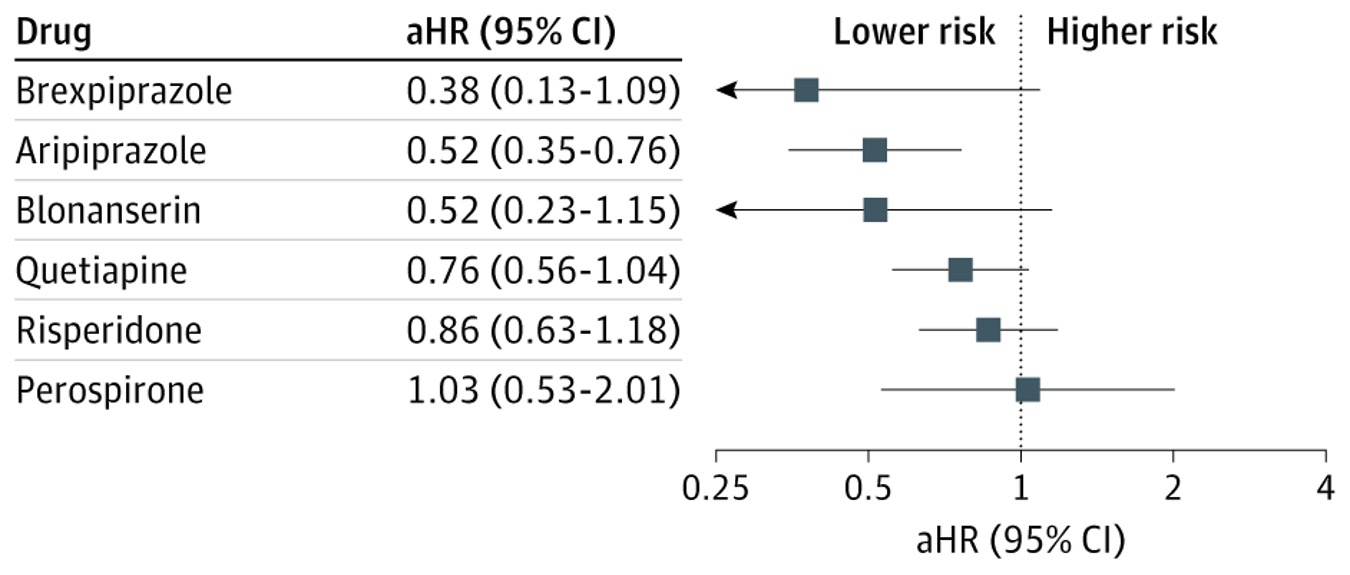
Image title: Adjusted hyponatremia risk across individual antipsychotics
Image caption: Adjusted hazard ratios for hyponatremia associated with individual antipsychotics compared with olanzapine after statistical weighting. Aripiprazole showed a significantly lower risk than olanzapine.
Image credit: Associate Professor Masakazu Hatano from Fujita Health University, Japan
Image Source Link: https://doi.org/10.1001/jamanetworkopen.2026.28796
License type: CC-BY-NC-ND
Usage restrictions: Credit must be given to the creator. Only noncommercial uses of the work are permitted. No derivatives or adaptations of the work are permitted.
Reference
Title of original paper:
Comparative Risk of Hyponatremia Among Patients Treated With Second-Generation AntipsychoticsJournal:
JAMA Network OpenDOI:
10.1001/jamanetworkopen.2026.28796About Associate Professor Masakazu Hatano from Fujita Health University
Dr. Masakazu Hatano is an Associate Professor in the Department of Pharmacotherapeutics and Informatics, Fujita Health University School of Medicine, Japan. His research focuses on psychopharmacology, psychiatry, pharmacoepidemiology, and pharmacovigilance. His academic work includes studies using large healthcare databases and spontaneous reporting systems to evaluate clinical pharmacotherapy and treatments for mental disorders. Through studies using data and safety reporting systems, he contributes to understanding medication-related risks and supporting evidence-based decisions in psychiatric care and pharmacotherapy.
Funding information
This study was supported by The Research Foundation for Pharmaceutical Sciences (JSPS KAKENHI grant 26K18918).